If you are a new watcher of the pinnacle of motor sport, perhaps you’ve wondered what the different F1 flags mean. Maybe you surmised it quickly but still want some verification. Either way, you’re not alone. Flags are one of the most important parts behind Formula Racing, and yet, they can be confusing sometimes. Regardless, once you are familiar with them, you’re on your way to never missing a beat in a race again.
There are plenty of resources out there that explain the meanings behind each flag. However, I’m delivering you information that’s short, sweet and to the point.
You can watch a 60-second breakdown here:
Why Do We Still Use Flags?
Even though we now have modern light panels and digital dashboards, marshals around the tracks still wave physical flags. Why is that? Well, they remain a core part of the sport because they are an official and legally binding communication system established in the FIA International Sporting Code. All professional drivers are trained to recognize and act immediately. When you see a flag, the instructions are crystal clear. The flag panels are just further assurance that flag messaging is clear.
The Full F1 Flag Breakdown
1. Green Flag

This one is pretty simple. You’ll see this at the start of a session, or right after a hazard has been cleared (after a Safety Car period ends). Basically, it’s the “all clear” signal. You are GOOD TO GO.
2. Yellow Flag

Just like a yellow light, this signifies possible hazard ahead. SLOW DOWN. There could be debris on the track, a stopped car, a random animal that ran across a track (yes, that has happened).
If there is a DOUBLE YELLOW, that means the drivers must slow down significantly or even be prepared to stop as there could be marshals on the track.
3. Yellow Flag with Red Stripes
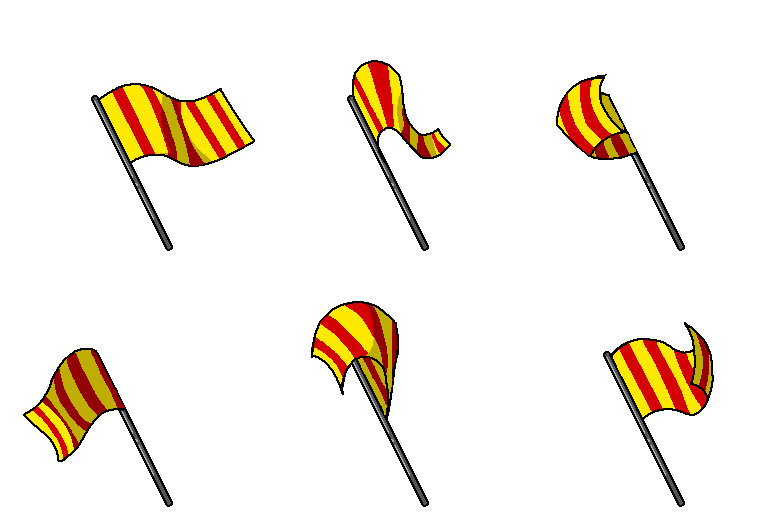
This flag warns the drivers that the track can be slippery. This can be a result of rainy weather, oil, or other debris that have affected the grip level of the track. So, drivers need to be prepared to adjust to those conditions and hope they don’t spin out.
4. Red Flag

This flag signals the drivers to stop the session IMMEDIATELY. All drivers must slow down and return to the pit lane as soon as possible. This flag is waved for a variety of reasons. It can be due to bad weather, a serious crash, etc. In other words, it means that it’s not safe to race.
5. Blue Flag

This flag is a point of contention for people and for an understandable reason. If you get a blue flag, it means you’re going too slow and a driver behind you is about to overtake you.
On one hand, it’s a good signal to communicate that someone is right on your tail. On the other hand, you CAN get penalized if you DON’T let them pass you. If you listen to team radios, you might hear team principals tell their drivers to let whoever is behind them pass (usually a teammate). Either way, if you see a blue flag, definitely listen in on the team radios…they’ve got some tea to serve.
6. White Flag

Don’t get this flag confused with the yellow flag. The white flag indicates that there is a slow-moving vehicle up ahead. It doesn’t have to be just a damaged F1 car, this can also be a medical car, recovery, safety, etc.
Basically, drivers can use their discretion to slow down or not. This honestly is another chance to tune into the team radios. It’s quite entertaining at times to hear the drivers go nuts over this.
7. Black Flag

The rarest and most severe flag of the group. If a driver gets black flagged, they’re disqualified from the race. No ifs, and, or buts. This flag is incredibly rare to see and has only been used 3 times in the past 2 decades. The last driver to get this flag was Nico Hulkenberg at the San Paolo Grand Prix.
8. Black and Orange Flag (Meatball Flag)

No mystery why it has that nickname. The flag looks like it has a meatball on it. Jokes aside, this flag is used together with a driver’s car number to indicate that there is a mechanical problem. The said driver must return to the pit lane for inspection while the other drivers also need to drive with caution around said driver.
9. Black and White Flag

Not the checkered flag, but a diagonal split of the two colors. This flag formally represents a warning for unsportsmanlike behavior and is shown alongside a driver’s car number.
This doesn’t always mean that the driver is being a jerk face, it can mean that they violated track limits or just didn’t conduct themselves expected of their position, which…I guess could mean they are indeed being a jerk face. If they don’t shape up, they can receive penalties.
10. Checkered Flag
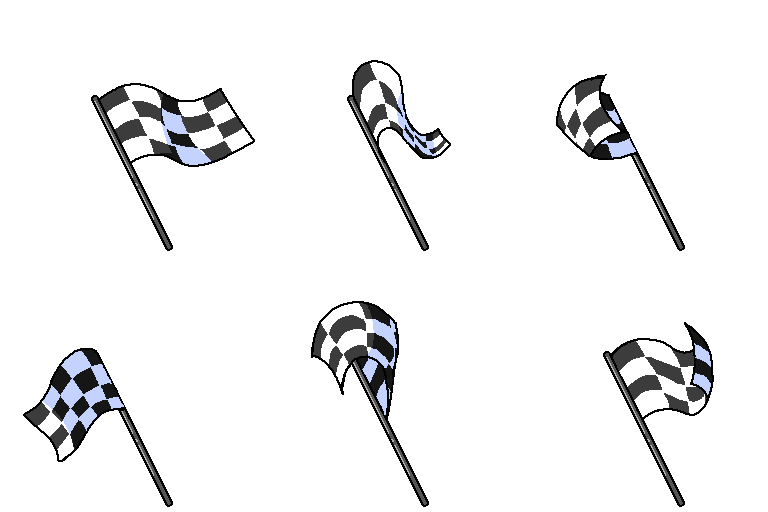
The black and white checkered flag is the easiest one, yeah? It marks the end of a race and is waved continuously until all the cars have reached it. The poor guy waving it might need to have strong arms for that one sometimes…
Congratulations! You just kick started your journey to understanding the fundamentals behind F1 flags! I gathered the information from the official F1 website. If you’d like a bit more in depth information, F1 Chronicle is another great source, too.

